
Brand Identity Project Showcase

GTE Corporate Identity Program
Reimagining a major telecommunications brand through a contemporary visual identity inspired by global connectivity, technical precision, and enduring reliability.
Project Tags
Project Overview
During the early 1990s, telecommunications companies were rapidly expanding beyond traditional voice service into fiber optics, digital networking, mobile communications, and enterprise infrastructure. This conceptual identity program reimagines GTE with a contemporary visual system capable of representing both engineering reliability and growing technology leadership.
Rather than treating the logo as a standalone exercise, the project explores how a complete identity system can unify every customer touchpoint: utility trucks, field technicians, corporate communications, building signage, network operations centers, telecommunications equipment, and branded merchandise.
The result is a flexible brand language designed for visibility, consistency, and trust across the many physical and technical environments where a telecommunications company comes to life.
Project section
The Mark
The circular communications symbol represents continuous information flow, network connectivity, and the exchange of data across an expanding communications infrastructure. Its simplified geometry allows the mark to reproduce cleanly across uniforms, vehicles, technical documents, signage, equipment decals, and digital environments.
The bold GTE typography provides stability and immediate recognition, while the symbol introduces motion, continuity, and technological progress.
Logo Standards
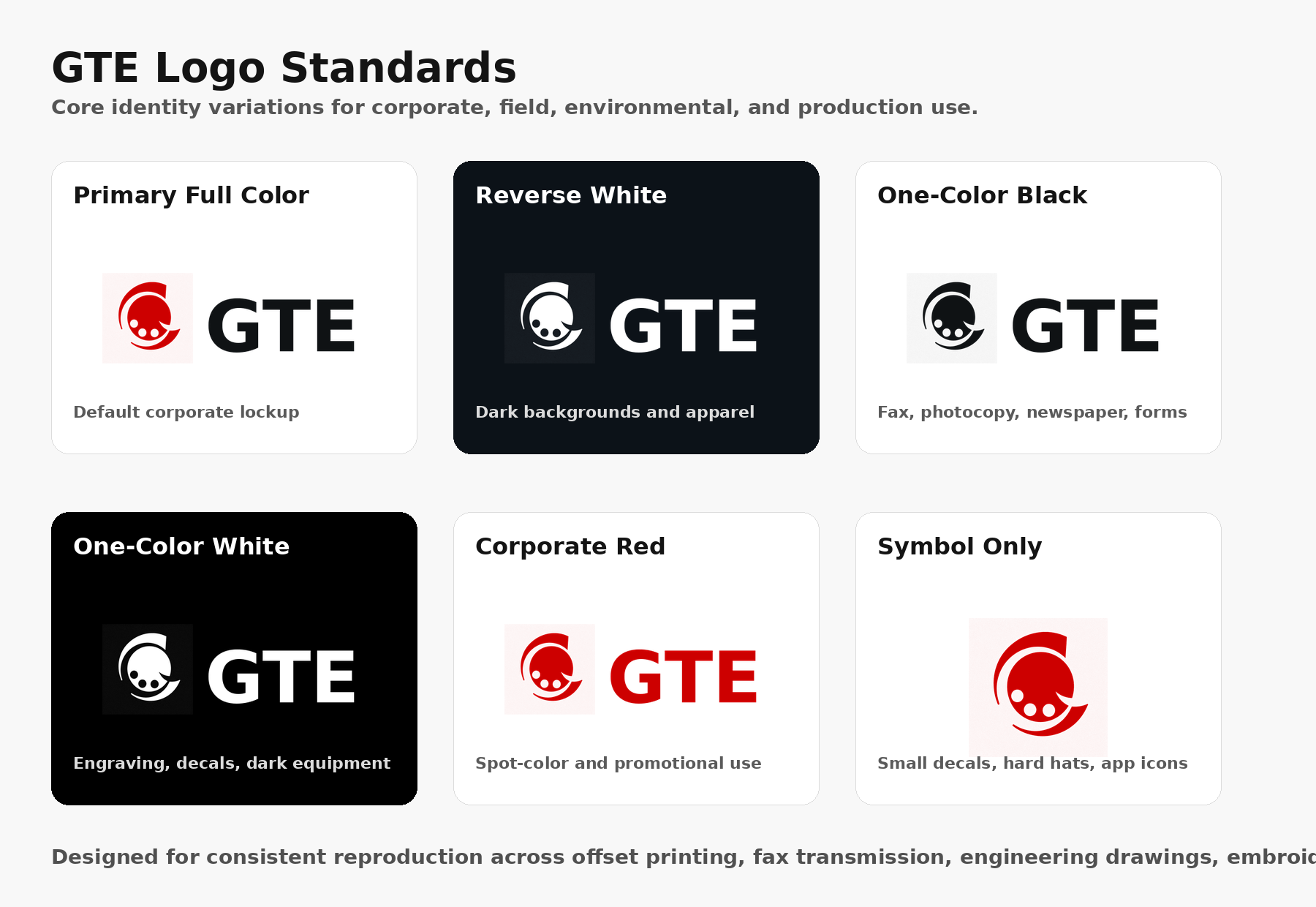
A complete telecommunications identity system needs optimized artwork for digital applications, signage, embroidery, one-color printing, photocopying, fax transmission, engineering documentation, and high-contrast reproduction. These variations help the GTE mark remain recognizable and technically reliable across every production method.
Select any logo variation to enlarge. Use arrows, keyboard navigation, swipe, or the close button to move through the identity standards gallery.





Brand Applications
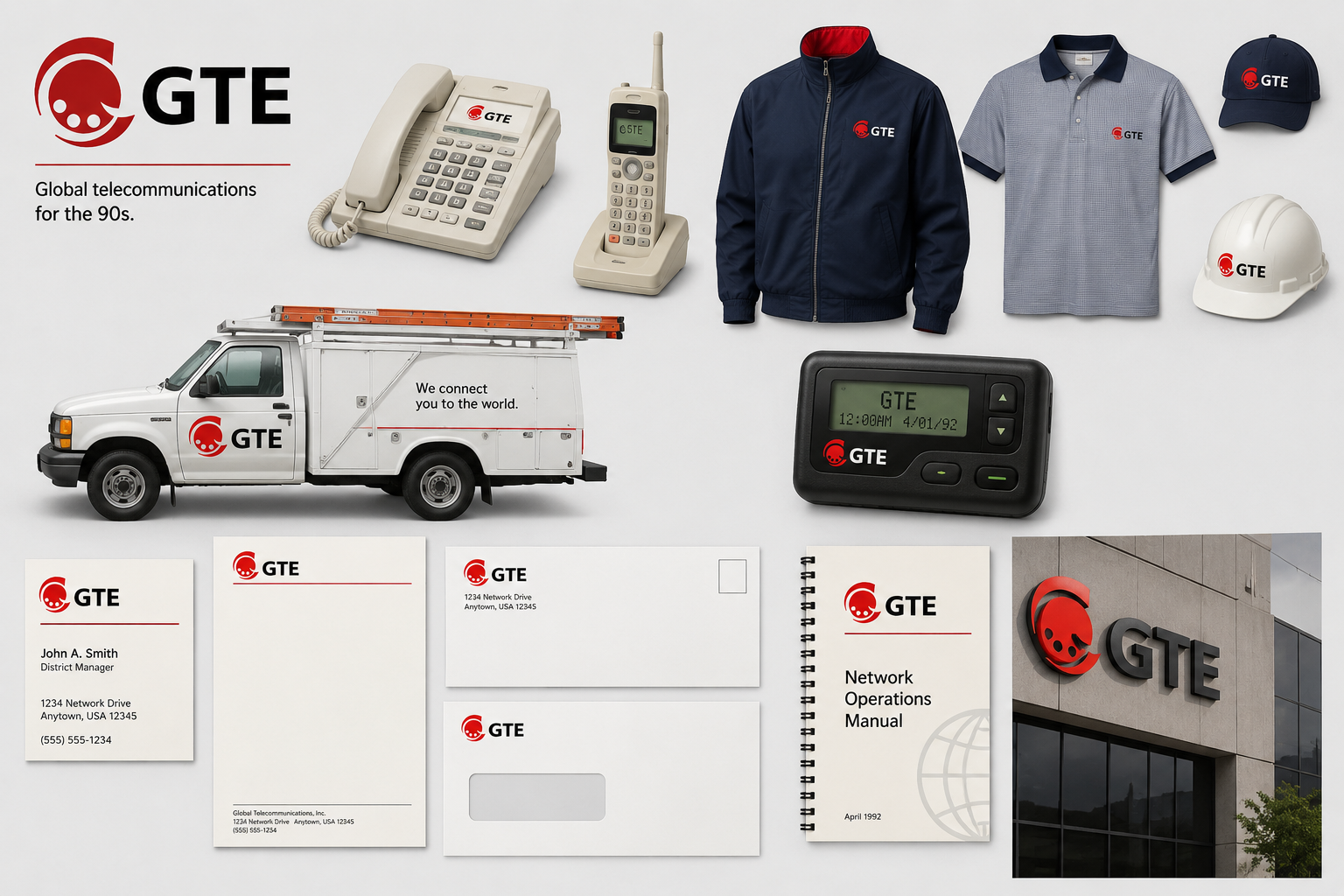
The GTE identity system was explored across the full operational range of a national telecommunications provider, from corporate communications and customer-facing facilities to field service vehicles, network infrastructure, uniforms, and promotional materials.
Select any image to enlarge. Use arrows, keyboard navigation, swipe, or the close button to move through the gallery.
Field Operations
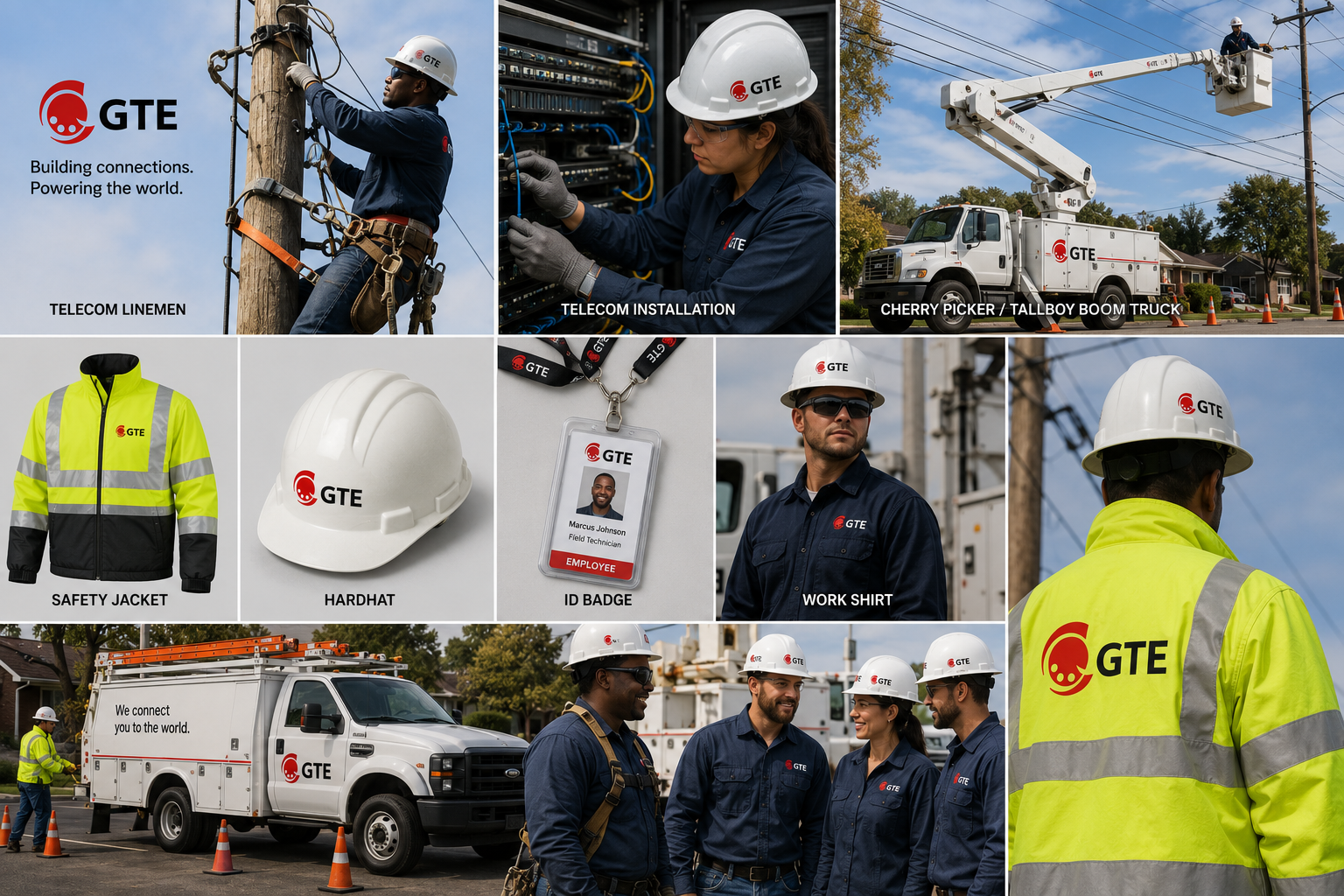
The identity needed to work in demanding service environments where visibility, safety, recognition, and professionalism matter. Field applications demonstrate the brand across technicians, utility vehicles, hard hats, safety apparel, ID badges, and installation environments.
Fleet & Infrastructure
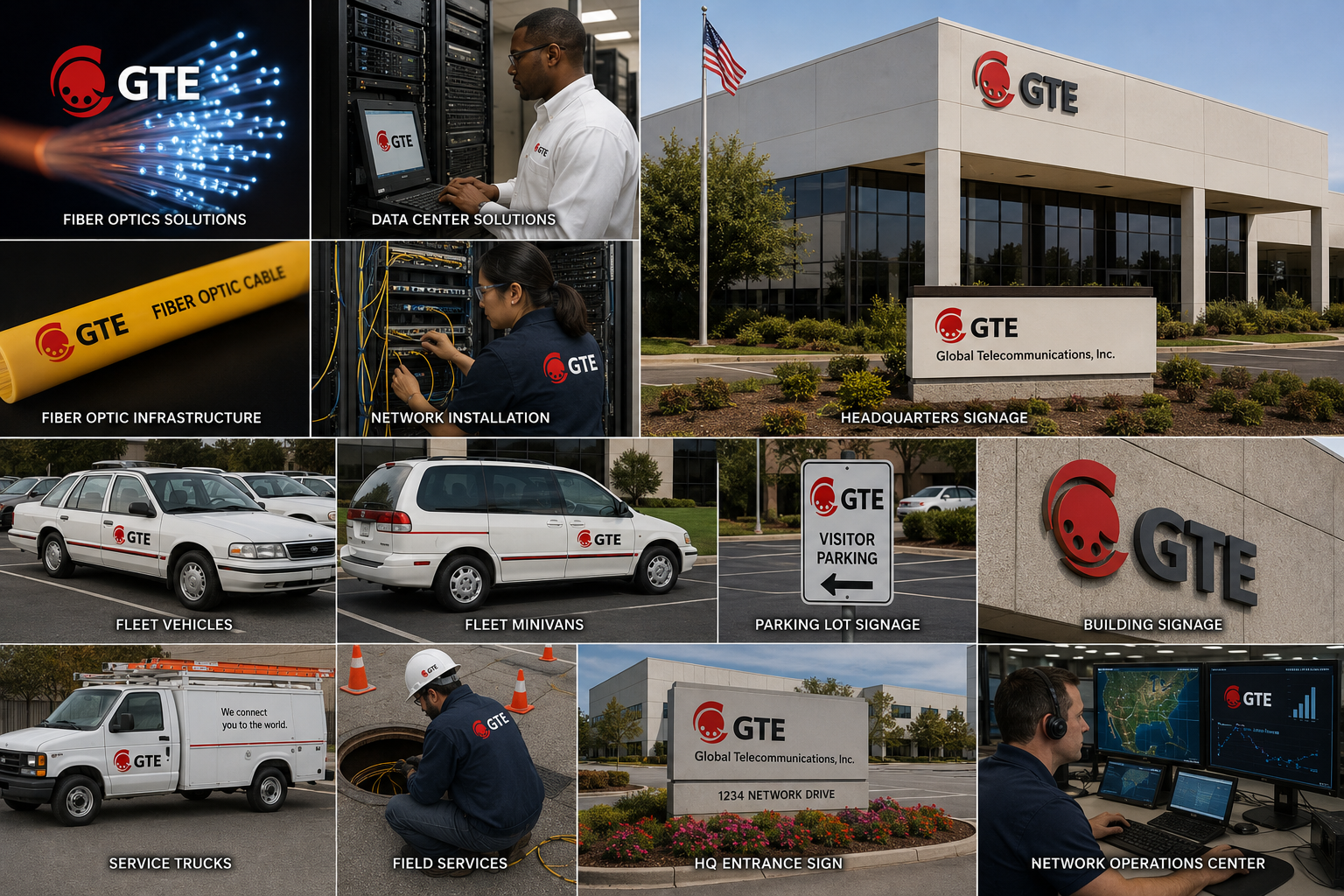
Telecommunications brands depend on trust at scale. These applications show how the identity could perform across data centers, network installation, fiber optic infrastructure, fleet vehicles, headquarters signage, parking systems, and network operations environments.
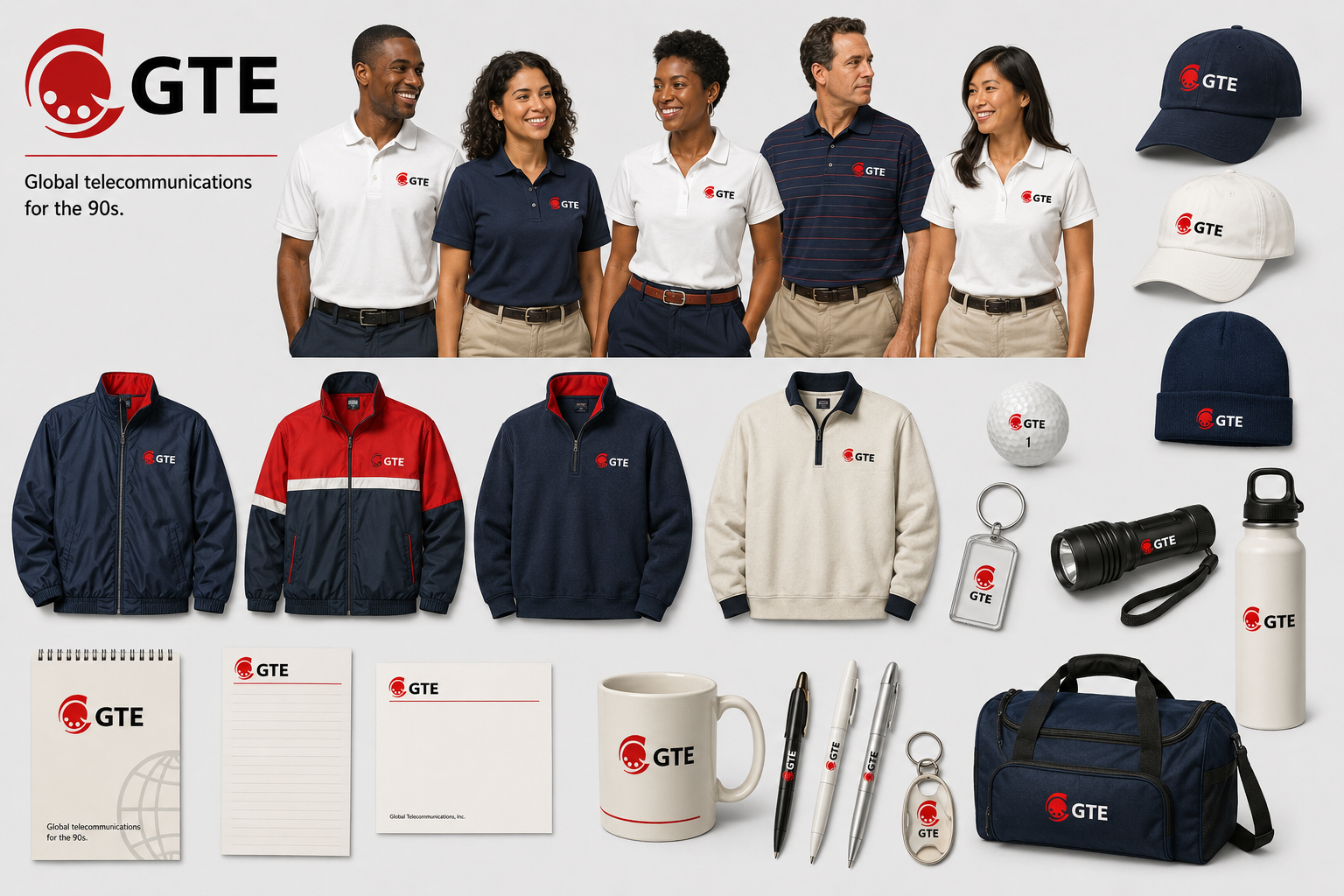
Apparel & Merchandise
A comprehensive identity system also supports internal culture, recruiting, events, field recognition, and promotional use. Apparel and merchandise applications extend the brand into everyday employee and customer-facing contexts.
Design Strategy
The identity was designed around simple, durable forms that could support a large and technically complex organization. The circular symbol suggests global communications, signal transmission, routing, continuity, and the movement of information through connected systems.
Production flexibility was central to the concept. A telecommunications identity must reproduce consistently on photocopied documents, engineering drawings, embroidered uniforms, hard hats, vinyl vehicle graphics, phone equipment, printed manuals, and large-scale architectural signage.
The visual language intentionally avoids short-term stylistic trends. Instead, it emphasizes clarity, recognition, scale, and reliability: qualities that matter when customers depend on a company to keep businesses running, emergency services connected, and families communicating.
Brand Principles
- Built for recognition: Simple forms create immediate identification across every medium.
- Designed for scale: The mark remains clear from small equipment decals to large building signage.
- Engineered for production: The system supports print, vinyl, embroidery, fabrication, screen printing, and digital use.
- Flexible by design: Applications work across corporate, technical, field, fleet, and customer-facing environments.
- Timeless in tone: The design emphasizes longevity rather than chasing short-lived trends.
Brand in Context
Telecommunications companies occupied a unique position during the early 1990s. Customers relied on them to support emergency services, businesses, financial institutions, public infrastructure, and personal communication. A successful identity needed to communicate more than technology; it needed to inspire confidence.
Every interaction mattered: a service technician at a customer's home, a fleet vehicle in the neighborhood, a monthly statement, a field manual, a phone on a desk, or a sign outside a network operations center. This concept explores how a disciplined visual system can reinforce trust through repetition, consistency, and visibility.
Project Highlights
- Created a conceptual corporate identity system for a national telecommunications brand
- Extended the identity across fleet, infrastructure, field operations, signage, apparel, and communications
- Balanced technical confidence with approachable public-facing recognition
- Demonstrated how a logo system can unify a complex organization across many customer touchpoints
- Explored practical production requirements including embroidery, vehicle graphics, equipment decals, signage, and printed documentation
Reflection
GTE demonstrates how identity design can become infrastructure in its own right. The mark is only one part of the system; the real value comes from seeing how consistently it can appear across vehicles, uniforms, facilities, technical equipment, documentation, and customer-facing environments.
A telecommunications brand has to do more than look modern. It has to feel dependable. By designing the identity as a complete system, the brand becomes a familiar presence in the places where people experience connectivity most directly.
Looking back, this concept reinforced the importance of designing identity systems rather than isolated logos. Large organizations rely on consistency across hundreds of applications, and the strength of a mark is ultimately measured by how confidently it performs in the real world, not simply how it appears on a presentation board.
Identity is never just a logo. The strongest brands earn recognition through repeated, consistent experiences across every interaction.
Related Identity Projects
Continue Exploring
Additional identity programs exploring telecommunications, collegiate identity, technology positioning, and product-focused brand systems.